
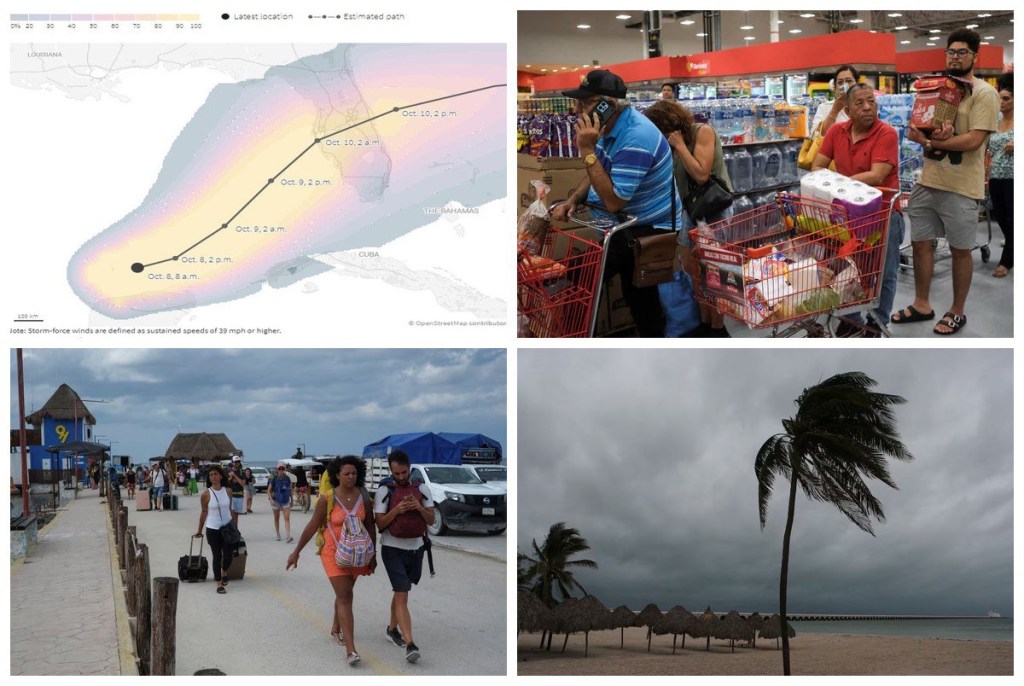
As Hurricane Milton barrels towards Florida with terrifying force, forecasters are warning that it could leave a mark unlike any storm in the state’s recorded history. Already a formidable Category 5, Milton has reached maximum strength and shows no signs of slowing down. The storm’s projected path suggests widespread devastation as it edges closer to the coast.
Currently, Hurricane Milton is located about 520 miles southwest of Tampa, creeping toward Florida at 12 mph. The winds near its core are clocking an astonishing 65 meters per second (around 145 mph), making this storm one of the most powerful to threaten the U.S. in recent memory.
A State on Edge: Evacuations and Preparations
Millions of Florida residents have already begun evacuating ahead of Hurricane Milton’s anticipated landfall. The storm is expected to strike Florida’s Gulf Coast as early as 2 a.m. on October 10, sending residents across the state into a frenzy of preparation.
Highways, particularly I-75, are clogged with traffic as people race to evacuate from the storm’s path. Gas stations are reporting fuel shortages, with long lines stretching down the streets. Supermarkets and hardware stores have been stripped of essentials like water, non-perishable food, batteries, and plywood. The shelves are bare, and the sense of urgency is palpable as the clock ticks down to Milton’s arrival.
Emergency officials are urging those still in evacuation zones to leave immediately. With the storm intensifying, there is a growing concern that those who remain may face life-threatening conditions.
Why Milton Could Be Historic
While Florida has endured hurricanes before, Hurricane Milton presents a unique threat due to its intensity, size, and slow-moving nature. Meteorologists are already comparing it to past devastating storms such as Hurricane Andrew in 1992 and Hurricane Michael in 2018. However, Milton’s potential to remain at maximum strength for an extended period, combined with its slow pace, could result in a prolonged and catastrophic impact across central Florida.
Storm Surge and Inland Flooding: One of the most dangerous aspects of Hurricane Milton is the forecasted storm surge. Low-lying coastal areas could experience floodwaters up to 12 feet deep, submerging homes and infrastructure. Inland flooding is also a major concern, as torrential rain is expected to drench the state, overwhelming rivers and drainage systems.
Wind Damage: With sustained winds of 145 mph at its core, Milton has the power to level buildings, topple trees, and leave communities without power for days, if not weeks. Even areas far from the coast are bracing for hurricane-force winds as the storm makes its way across the state.
Economic Impact: The economic toll of Hurricane Milton is difficult to estimate, but early predictions suggest that it could surpass previous storms in both property damage and recovery costs. Businesses, farms, and tourism — a vital part of Florida’s economy — all stand to be heavily impacted. Insurance companies are preparing for record-breaking claims, while emergency services brace for a drawn-out recovery effort.
What to Expect in the Coming Days
Hurricane Milton’s path remains a topic of close scrutiny, but its slow pace means the storm will likely move over central Florida throughout October 10. Residents in Milton’s projected path are urged to heed evacuation orders and take necessary precautions. With power outages and flooding highly likely, it’s essential to be prepared with emergency supplies and a plan to stay safe.
In the coming days, Florida will face a daunting challenge as this historic storm sweeps across the state. Milton could well reshape the landscape — both literally and figuratively — in ways that won’t be forgotten for generations.
Stay tuned for ongoing coverage as Hurricane Milton approaches Florida and we continue to track its progress.
 CHUCKYSCARNAGE