
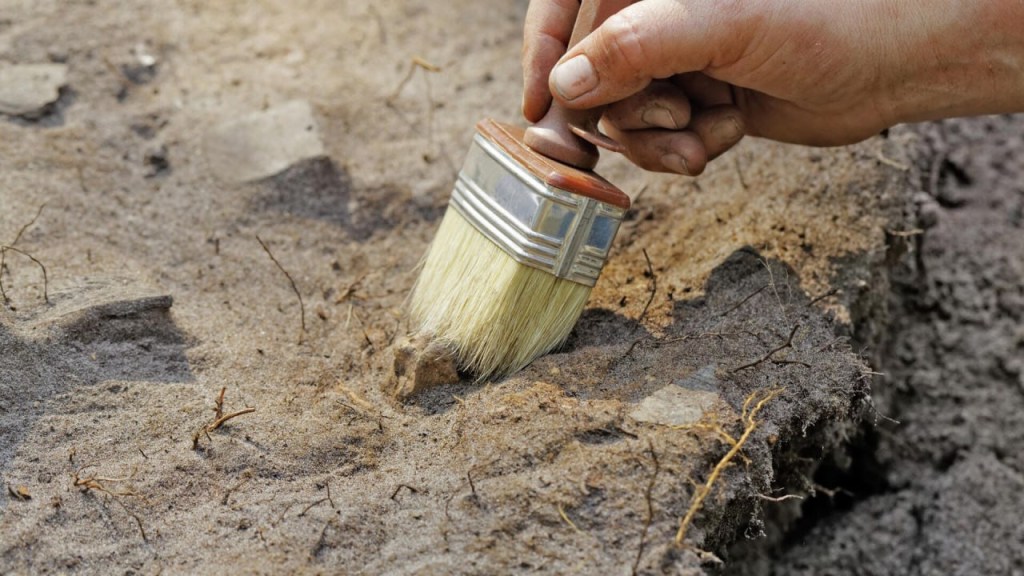
A remarkable archaeological discovery was made in Henan province, central China, as researchers uncovered a tomb believed to be around five thousand years old. The tomb, identified as Tomb M27, is attributed to the Dawenkou culture, an ancient civilization that thrived in the region during the Neolithic period. According to Xinhua News, the find could potentially shed light on the origins of Chinese civilization.
Tomb M27 spans 17 square meters and, based on its features, it is speculated that the individual buried there held a high rank, possibly an ancient monarch. The tomb’s location is within the vicinity of Shangqiu city, an area historically significant for its rich cultural heritage. Along with the tomb, archaeologists unearthed 350 ancient relics, ranging from jasper and pottery to the lower jaws of pigs—symbols believed to signify wealth. Intriguingly, ivory jewelry was also among the artefacts, hinting at the deceased’s elevated status in society.
This discovery is poised to offer new insights into the socio-political dynamics of early Chinese civilization and the cultural practices of the Dawenkou people. Such findings play a critical role in piecing together the development of ancient societies in China, marking a significant contribution to global archaeological knowledge.
 CHUCKYSCARNAGE