
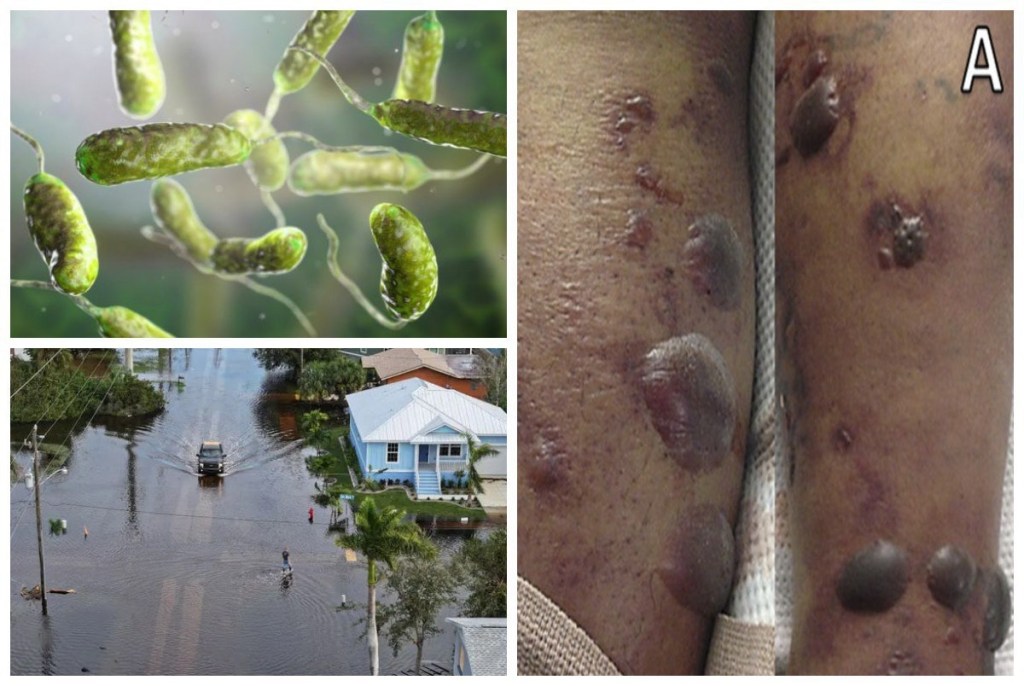
Health officials in Florida have reported a significant increase in Vibrio vulnificus infections, a dangerous flesh-eating bacterium that thrives in warm, brackish waters. The surge in cases began after the destruction caused by hurricanes Helene and Milton, which created ideal conditions for the bacteria’s spread.
Alarming Numbers
In just eleven months, the state recorded 74 vibriosis cases, 13 of which were fatal. For comparison, Florida saw 46 cases and 11 deaths over the entirety of the previous year. The affected counties include Citrus, Hernando, Hillsborough, Lee, Pasco, Pinellas, and Sarasota, regions hit hardest by the hurricanes.
How the Bacteria Spreads
Vibrio vulnificus typically infects individuals through exposure to contaminated water, either by ingesting it or through contact with open wounds. Once inside the body, the bacteria can cause a host of severe symptoms such as fever, low blood pressure, nausea, diarrhea, and vomiting. In the most severe cases, the bacteria rapidly destroy human flesh. If antibiotics fail to halt its progress, doctors may have no choice but to amputate the infected limb.
What to Know
As the impact of climate change intensifies, so does the risk of Vibrio vulnificus outbreaks, especially after natural disasters. It is crucial for those living in or visiting hurricane-affected areas to take precautions, such as avoiding exposure to floodwaters, especially if they have open wounds.
 CHUCKYSCARNAGE