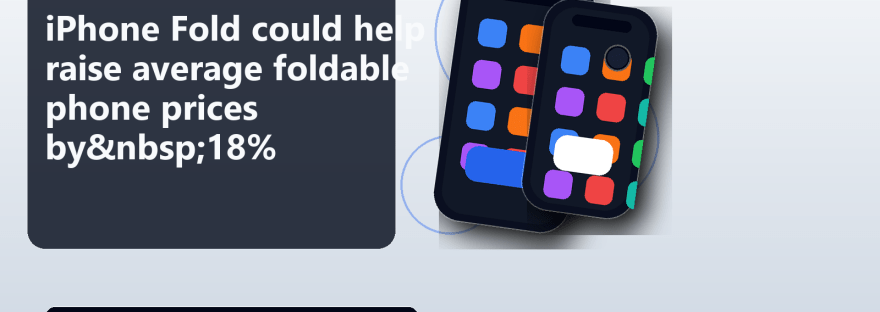
iPhone Fold could help raise average foldable phone prices by 18% is best read as a research story with consequences, not as a novelty headline. The question is what the work actually shows, how strong the evidence is, and whether it gives researchers or engineers a more useful way to solve the next problem.
The test is not whether the discovery sounds impressive on first reading. It is whether the evidence is strong, the limits are clear, and the work gives other researchers a firmer platform for the next step.
The Research
9to5Mac iPhone reports that iPhone Fold could help raise average foldable phone prices by 18%, per report. According to Counterpoint Research, Apple’s entry into the foldable smartphone market will be one of the factors driving an 18% increase in average sale prices in the category in 2026. Here are the details. The key issue is whether the finding is strong enough to guide follow-up research, better tools, safer systems, or real-world applications.
Known Details
- 9to5Mac iPhone: iPhone Fold could help raise average foldable phone prices by 18%, per report
- According to Counterpoint Research, Apple’s entry into the foldable smartphone market will be one of the factors driving an 18% increase in average sale prices in the category in 2026
- pricing pressure
Why It Matters
The move suggests a more aggressive retail strategy around the iPhone, especially in markets where premium phones have to fight harder for attention, upgrade cycles are stretching, and buyers are more sensitive to price.
For readers, the value is in knowing what the finding can and cannot prove. Strong science coverage should explain the evidence, the limit of the claim, and whether the work is likely to influence tools, medicine, energy, materials, computing, climate work, or future research.
A few details give the story its shape: pricing pressure and 18%. Those are the pieces that keep this from feeling like a vague headline and make it easier to see where the real impact may land.
Phone news can shape upgrade timing, buying choices, app support, and how long older devices stay useful; Apple ecosystem updates often affect iPhone, iPad, Mac, iOS, app developers, and accessory buyers at the same time; science updates often start as research signals before they turn into products, tools, or policy questions.
The useful question is what the finding changes: whether it improves a method, confirms a theory, reduces risk, makes a tool more accurate, or opens a path for future work.
It also matters because scientific progress often arrives quietly. A method can improve before the public ever sees a new product, and that improvement can later influence safety standards, manufacturing choices, research tools, or the way engineers solve old problems.
The Bigger Picture
The bigger picture is whether this work changes the tools available to researchers or engineers. A narrow finding becomes important when it improves measurement, reduces uncertainty, or gives other teams a method they can test against their own data.
This is how much of science actually moves: not in thunderclaps, but in careful improvements that make the next experiment less blind than the last.
The Practical Read
For science and space stories, the practical value is in what the discovery, mission, or experiment could make possible next.
The missing details are just as important as the confirmed ones. Readers should watch whether the work is peer-reviewed, whether the method can be repeated, and whether other teams build on it or challenge it.
The best move is to separate the initial finding from the real-world effect. A study can be promising without being final, and the strongest science stories become more important when other researchers test, refine, and apply the work.
What To Watch Next
- peer review, replication, or follow-up research from other teams
- whether the method moves from lab testing into real-world systems
- which industries, tools, or public problems the work could eventually affect
- clear explanations of limits, uncertainty, and what still needs proof
Bottom Line
Not every early result becomes a revolution, but the useful ones reveal where knowledge is becoming sturdier. The question is whether the evidence survives follow-up work.
Discover more from ChuckysCarnage
Subscribe to get the latest posts sent to your email.

