
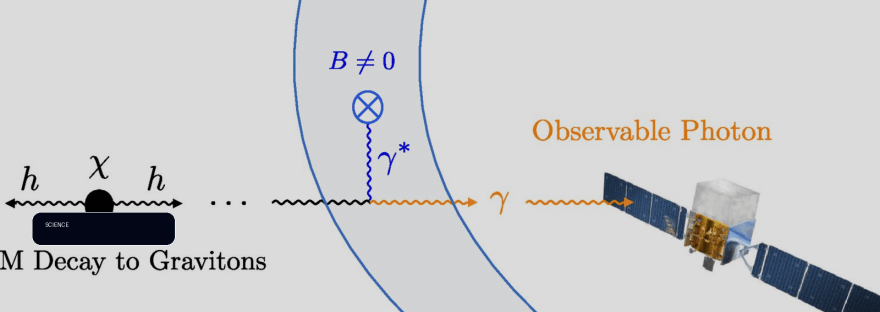
Composing some 85% of the universe’s total mass, dark matter betrays its presence only through gravity, unlike ordinary matter Yet through new research published in Physical Review D, a team led by David Dunsky of New York University has proposed a new way to hunt for the elusive substance
Yet through new research published in Physical Review D, a team led by David Dunsky of New York University has proposed a new way to hunt for the elusive substance.
Their approach involves searching for the decay of dark matter particles into gravitons: the hypothetical particles thought to carry the force of gravity itself.
The scientific context matters more than the headline: the finding only earns its place once independent teams have checked the method and the results.
Figures cited in the reporting include 85%. Organizations named in the source material include York University has proposed a new way to hunt for the elusive substance.
Known Details
- Yet through new research published in Physical Review D, a team led by David Dunsky of New
What to watch:
- peer review, replication, or follow-up research from other teams
- whether the method moves from lab testing into real-world systems
- clear explanations of limits, uncertainty, and what still needs proof
Why This Matters
What changed: Yet through new research published in Physical Review D, a team led by David Dunsky of New York University has proposed a new way to hunt for the elusive substance. Independent confirmation is still pending, since coverage so far rests on a single outlet. For science new readers, readers should watch what changes in real products, real tools, and real daily use.
Chucky’s Analysis
The most concrete part of this story is that composing some 85% of the universe's total mass, dark matter betrays its presence only through gravity, unlike ordinary matter.
The reporting also notes that yet through new research published in Physical Review D, a team led by David Dunsky of New York University has proposed a new way to hunt for the elusive substance.
Because this rests on a single outlet's reporting, treat the specifics as credible but not yet cross-checked; the first independent confirmation is the signal to watch.
The open question for science news readers is how the story develops in independent, verifiable follow-ups.
The signal to watch is peer review, replication, or follow-up research from other teams.
Key Takeaways
- What we know: composing some 85% of the universe's total mass, dark matter betrays its presence only through gravity, unlike ordinary matter.
- What it means for you: readers should watch what changes in real products, real tools, and real daily use.
- What to watch next: peer review, replication, or follow-up research from other teams; whether the method moves from lab testing into real-world systems; clear explanations of limits, uncertainty, and what still needs proof.
Sources
This article was compiled from the following independent reporting:
Links direct readers to the original coverage so claims can be checked directly.
Conclusion
In short: composing some 85% of the universe's total mass, dark matter betrays its presence only through gravity, unlike ordinary matter. Watch for peer review, replication, or follow-up research from other teams; whether the method moves from lab testing into real-world systems before drawing conclusions about real-world impact.
Keep Exploring
Browse more stories on the site:
About the Author
ChuckysCarnage is an independent technology news site covering gadgets, software, science, and space. Every article is written from the day’s independent reporting, checked against the linked original sources, and reviewed for accuracy before it goes live. Corrections are handled through the Contact page and the Editorial Policy.
Discover more from ChuckysCarnage
Subscribe to get the latest posts sent to your email.

