
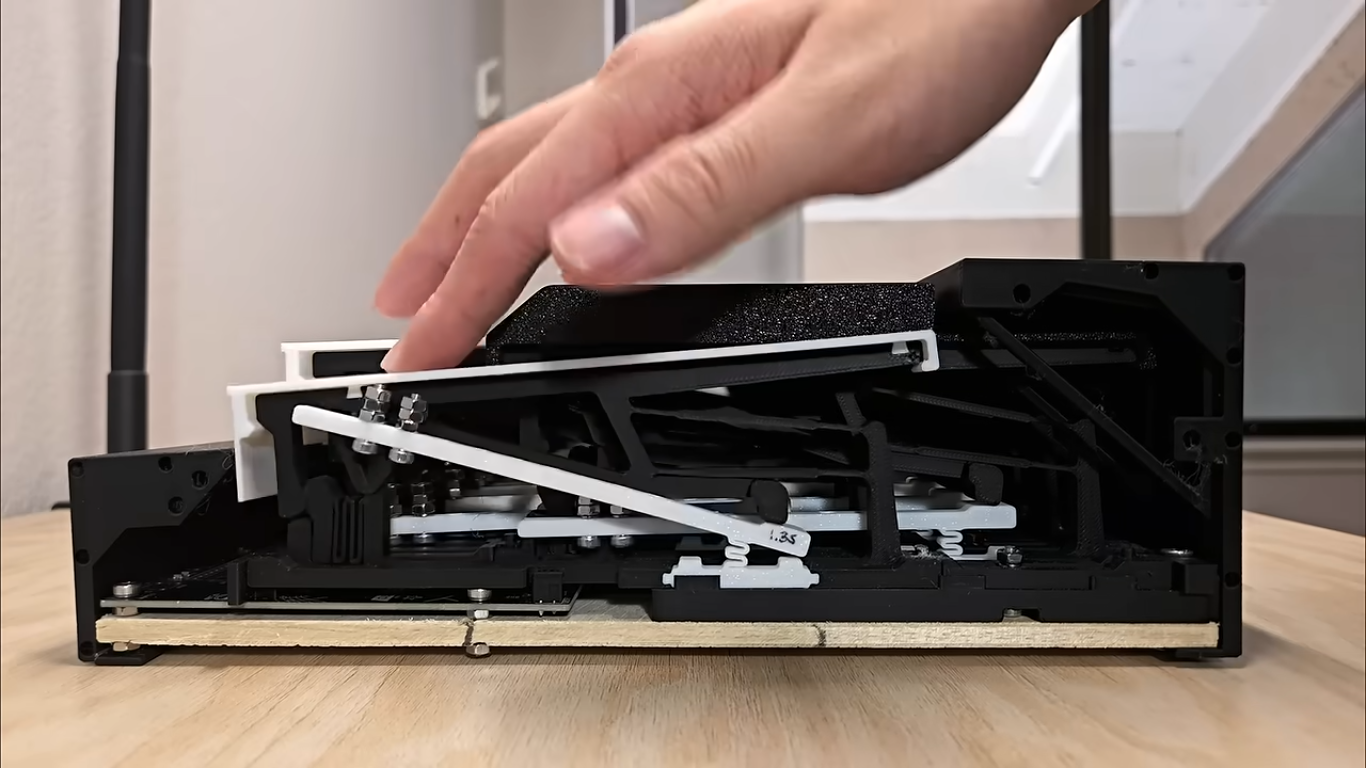
It has to do a lot of things simultaneously and quickly: provide precise control over velocity, …. It has to do a lot of things simultaneously and quickly: provide precise control over velocity, ensure the hammer doesn’t press itself against the strings, ensure the hammer rebounds without accidentally hitting the strings, allow for quick, continued strikes of the strings, and dampen the string after the key is released. But could [dovetail] do it with a 3D printer in a few weeks.
[dovetail]’s design relies on compliant mechanisms, which are solid parts that flex in specific and controlled ways to provide movement. Pianos have more than one key, though, so [dovetail] also had to design a modular system to piece all the keys together. As a prototype device it still has a few rough edges that [dovetail] plans to improve upon, like changing the sensors from IR to hall effect, improving the action and using a different filament.
There are some other things he has planned as well which we look forward to seeing in future videos. And, although a completely different instrument, it has several similarities to this action built to strike a bass drum instead.
Discover more from ChuckysCarnage
Subscribe to get the latest posts sent to your email.

