
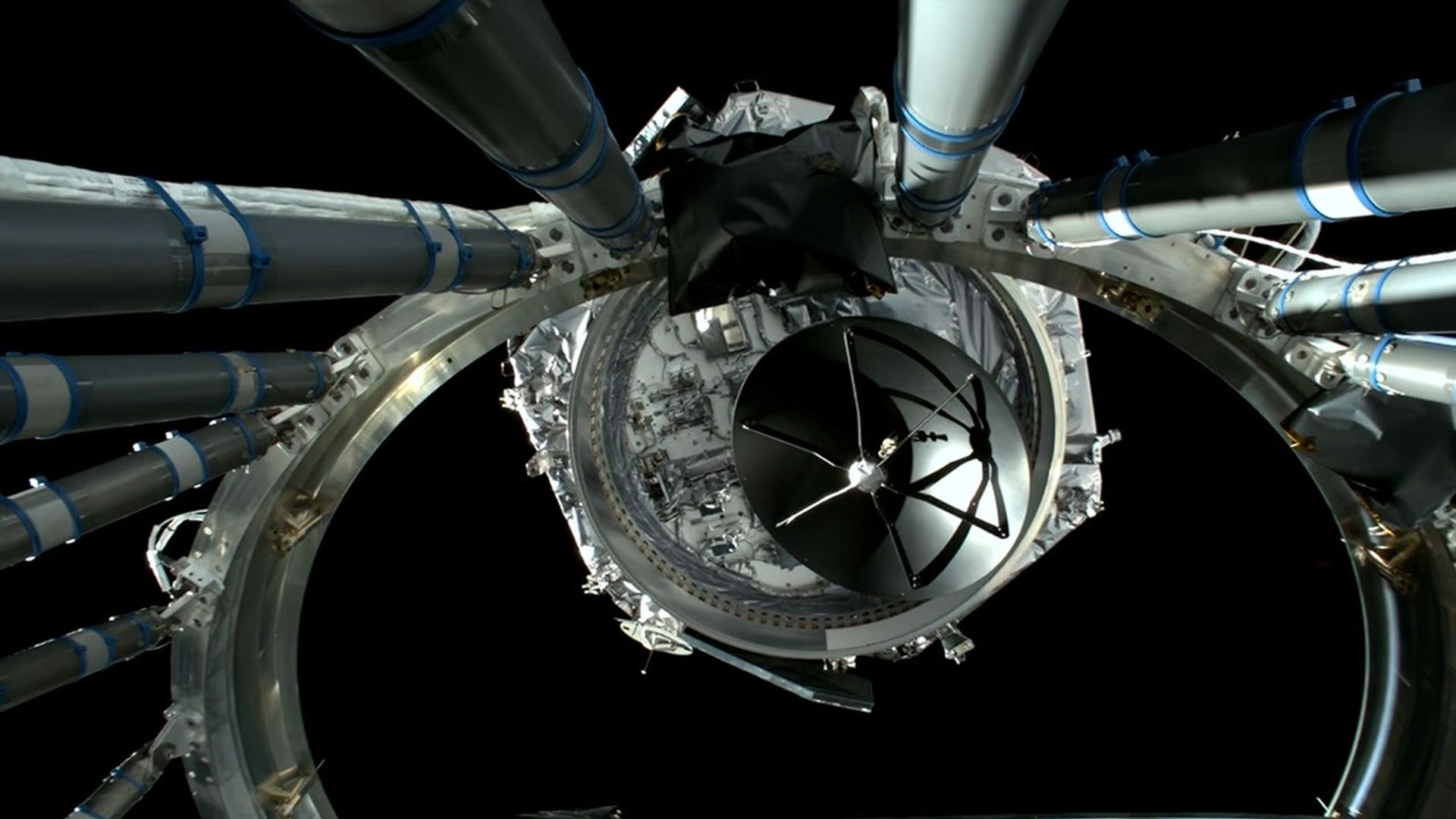
NASA’s Nancy Grace Roman Space Telescope separated from the SpaceX Falcon Heavy’s second stage. NASA’s Roman Space Telescope Flying on Its Own. NASA’s Roman Space Telescope Flying on Its Own Spacecraft separation occurs as the payload cleanly detaches from the upper stage, beginning its solo journey into orbit.
This milestone follows fairing deployment and stage separation, marking the moment the mission transitions from launch operations to on-orbit commissioning. NASA Editor’s note: Blog has been updated to reflect the approximate time for acquisition of signal. Roman established communications through a NASA Tracking and Data Relay Satellite earlier in ascent at 7:33 a.m.
Mission controllers will continue monitoring the observatory as it begins its journey toward an orbit around the second Sun-Earth Lagrange point, or L2, about 1 million miles from Earth. When Roman begins science operations, the Near Space Network will transmit Roman’s high rate science data, while the Deep Space Network will continue providing critical tracking data, including the precise range and angle measurements that show ground teams where Roman is in space. Additional support for downlinking Roman data will come from ESA (European Space Agency) and JAXA (Japan Aerospace Exploration Agency), through their New Norcia and Misasa ground stations, respectively.
Discover more from ChuckysCarnage
Subscribe to get the latest posts sent to your email.

