
Most of our experience with the Search for Extraterrestrial Intelligence (SETI) has focused on capturing radio signals that alien species have sent out, whether intentionally or unintentionally. That creates a huge "synchronicity" problem—what if there aren't any alien civilizations broadcasting radio signals now, but there were a billion years ago? The Milky Way is around 13 billion years old—hoping that we exist at the same time as an alien civilization that happens to be actively messaging is a huge leap of faith.
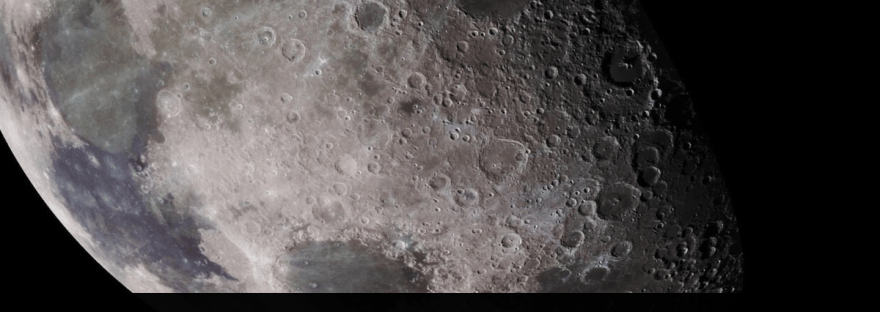
By Andy Tomaswick, Universe Today edited by Sadie Harley, reviewed by Andrew Zinin Sadie Harley Scientific Editor Meet our editorial team Behind our editorial process Andrew Zinin Chief Editor Meet our editorial team Behind our editorial process Editors' notes This article has been reviewed according to Science X's editorial process and policies. Editors have highlighted the following attributes while ensuring the content's credibility: fact-checked peer-reviewed publication trusted source proofread The GIST Add as preferred source Image of the south pole of the moon. But according to a new paper available as a preprint on arXiv and submitted to the International Journal of Astrobiology by Lewis J.
Pinault, an associate researcher at the SETI Institute, and his co-authors, we could take a completely different approach to trying to find alien civilizations—by looking for evidence of them in lunar dirt. That idea is not as crazy as it sounds. To be clear, it doesn't mean that aliens once lived on the moon—or anywhere in the solar system, for that matter.
But the moon is a really, really good garbage collector. The idea proposed in the paper is that, instead of looking for simple radio waves, we should look for physical artifacts that could only have been created by intelligent aliens, and the moon is a great place to look for them. Firstly, what does "artifacts" in this case actually mean?
The paper discusses two different types of particles. One is an Arkhipov particle, named after Ukrainian astronomer Alexei Arkhipov, who first floated this idea in the 1990s.
These are tiny pieces of unintentional industrial debris. If an alien civilization decides to build a Dyson swarm, some parts of it will inevitably be destroyed over time.
Fragments from that destruction could be pushed out of the star system that hosted that megastructure, and they could eventually make their way to our own solar system. This isn't as far-fetched as it sounds, as the sun rotates all the way around the Milky Way once every about 230 million years—and the Milky Way itself is around 13 billion years old.
So our own solar system has already traveled through much of the galaxy repeatedly. Video describing the SETI Institute’s search for “artifacts”.
These are intentionally sent to other solar systems—essentially, they act as "smart dust." And they might very well have ended up on the moon at some point over the last 13 billion years or so. Earth is a much bigger target, right?
The moon has several advantages in terms of preservation that Earth doesn't. First, it doesn't have an atmosphere, so particles aren't vaporized before they even hit the surface.
Second, it doesn't have plate tectonics or a water cycle, so any particles that do hit the surface aren't immediately trapped under a mountain or washed away into an ocean. And third, it experiences "impact gardening," whereby pieces of micrometeoroids hit the surface and churn the top layer of soil.
This allows microscopic pieces of technology to become buried under up to a few meters of regolith, protecting them from cosmic rays that might otherwise destroy them. The journey to the moon itself is dangerous, though.
As these technological materials travel through space, they're subjected to cosmic rays and particles of dust shooting through interstellar space alongside them in a giant cosmic shooting gallery. The paper notes that grains made of "refractory material," such as advanced ceramics, graphene or titanium-tungsten superalloys, can hold up against the onslaught for anywhere from 100 million to 1 billion years.
Discover more from ChuckysCarnage
Subscribe to get the latest posts sent to your email.
 ChuckysCarnage