
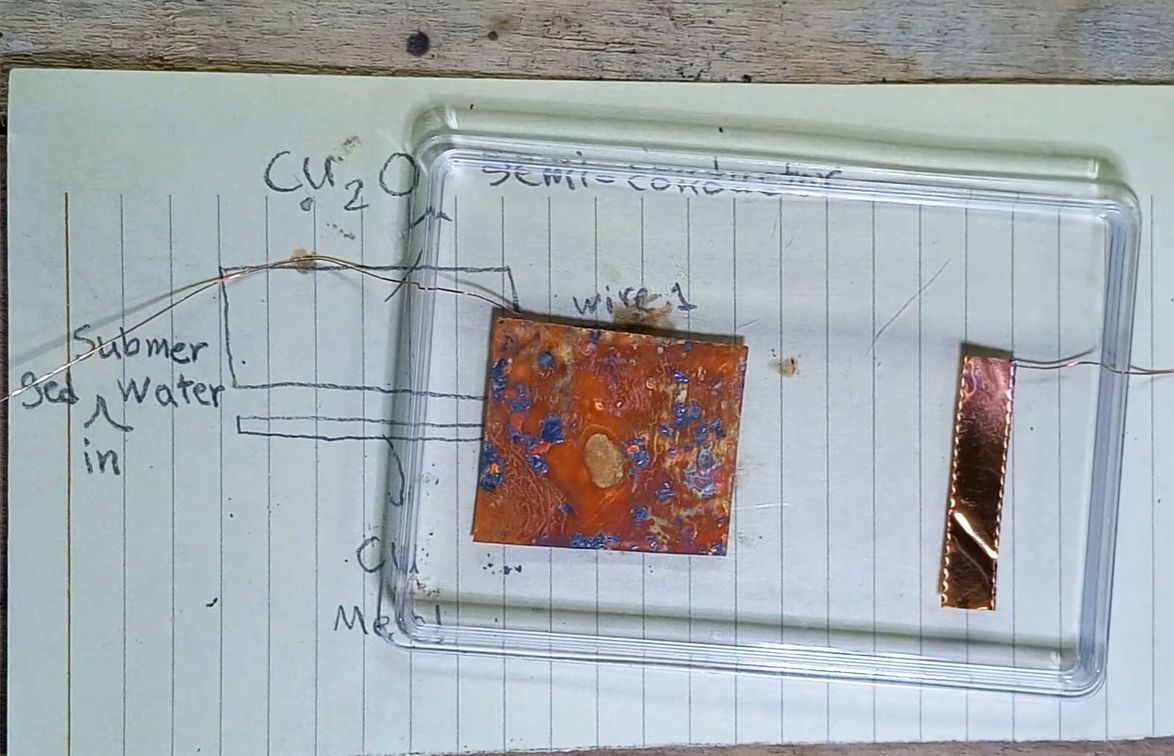
Photodetectors come in many constructions and materials, with the Cu2O-based photodetector that [Mad Scientist Creations] demonstrates in a recent video being a good example of a photodetector …. Making a Copper-Oxide Photodetector from Scratch. Of the two copper elements in a salt water cell, one element is heated to the point where a copper oxide layer forms, specifically Cu 2 O, which acts as a semiconductor and provides the photosensitive layer.
Even a fairly crude sensor created with a regular gas stove produces enough of a current that it can be used in a simple light detection circuit. Although copper-oxide photodetectors may seem quaint, they are getting a lot of interest as they feature a very narrow bandgap at 1.2 eV. As published in Scientific Reports such a sensor is enhanced with an optimized grain structure that improves its performance, with much higher sensitivity and faster response times.
As demonstrated by [Andrzej Kwiatkowski] et al. In a 2024 paper in Solar Energy Materials and Solar Cells these copper-oxide sensors can also be used for gas detectors, though they used advanced gas deposition to produce the thin films instead of sticking a bit of copper tape into a natural gas flame. Even if DIY copper-oxide sensors aren’t quite as exciting as what one can do with access to a well-equipped (semiconductor) lab, it’s still a pretty accessible material that lends itself for easy experimentation.
Discover more from ChuckysCarnage
Subscribe to get the latest posts sent to your email.
 ChuckysCarnage