
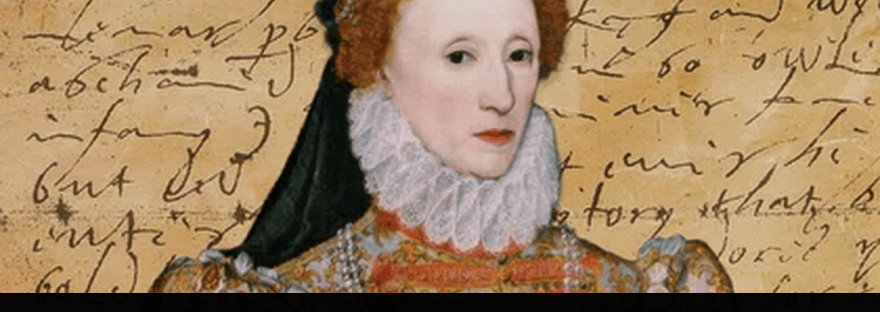
An analysis of more than 500 missives found that Elizabeth's advisers crafted and even intensified the expression of emotion in her messages to such figures as Mary, Queen of Scots, and James VI of Scotland. Work on Elizabeth I’s letters has focused on identifying the English queen’s “voice” within them. Yet they were often the products of collaboration between Elizabeth and her secretaries.
Illustration by Meilan Solly / Images via Wikimedia Commons under public domain On February 10, 1586, Elizabeth I wrote one of her most famous letters: a furious rebuke to her favorite, Robert Dudley, First Earl of Leicester. The Tudor queen sharply reprimanded Leicester for disobeying her. “How contemptuously we conceive ourself to have been used by you,” Elizabeth raged.
“We could never have imagined had we not seen it fall out in experience that a man raised up by ourself and extraordinarily favored by us above any other subject of this land would have in so contemptible a sort broken our commandment.” She demanded that Leicester obey her directions and issued a stark warning: “Fail you not, as you will answer the contrary at your uttermost peril.” The queen’s fury jumps off the page. Yet the only surviving copy of this letter is written in the hand of a secretary: Francis Mylles, servant to Elizabeth’s principal secretary, Francis Walsingham. Were Mylles and Walsingham involved in writing this apparently personal royal communication?
Without the original copy of this letter, we cannot say for certain. Through careful analysis of more than 500 of Elizabeth’s other letters, I have discovered that the expression of emotion in her correspondence was often carefully constructed by her secretaries. Francis Walsingham, Elizabeth's principal secretary and spymaster Public domain via Wikimedia Commons Around 3,000 of Elizabeth’s letters survive, the overwhelming majority of which were penned by scribes.
These so-called “ scribal letters ” have been severely neglected by historians, with priority given to those written in Elizabeth’s own hand. Disentangling these collaborations and recovering the contributions of Elizabeth’s secretaries was the focus of my PhD research, part of the Feathers project led by Nadine Akkerman, a scholar of early modern literature at Leiden University in the Netherlands.
Feathers sought to distinguish between authorial and scribal voices in collaboratively produced manuscripts from the early modern period (from around 1500 to 1800). Finding Elizabeth’s voice How can we distinguish between Elizabeth’s voice and those of her secretaries?
It might be assumed that the more personal elements of her letters, including the expression of emotion, can be safely attributed to the monarch herself. This is logical enough: Daring to communicate or presume to know the queen’s feelings without her prior instruction would have been bold indeed.
Early modern secretaries were expected to employ formal and impassive language and exert a tempering influence, moderating emotion to ensure the goodwill of the addressee. As I dug into the archival material, a more complicated reality emerged.
Elizabeth’s letters survive in a dizzying array of versions, including drafts, sent letters and copies. Through the reassembly of these different manuscripts, painstaking handwriting analysis and close textual comparison, I found evidence that the expression of emotion in Elizabeth’s letters was carefully crafted by her secretaries.
One example is a letter from Elizabeth to George Talbot, Sixth Earl of Shrewsbury, written in May 1584. At the time, Shrewsbury was the custodian of Mary, Queen of Scots, claimant to the English throne and a thorn in Elizabeth’s side.
Elizabeth would have expected Shrewsbury to share the missive with his royal prisoner. Need to know: Mary, Queen of Scots Mary was related to Elizabeth through her paternal grandmother, Margaret Tudor, the older sister of the English queen’s father, Henry VIII.
Mary fled to England in 1567, after Scottish nobles forced her to abdicate in favor of her infant son. Instead of offering Mary refuge, Elizabeth imprisoned her for 19 years before ordering her execution on charges of treason in 1587.
In the letter, Elizabeth strongly rebukes Mary.
Medical Disclaimer: This article is for informational purposes only and does not constitute medical advice. Always consult with qualified healthcare professionals for medical decisions and treatment options.
Discover more from ChuckysCarnage
Subscribe to get the latest posts sent to your email.

