
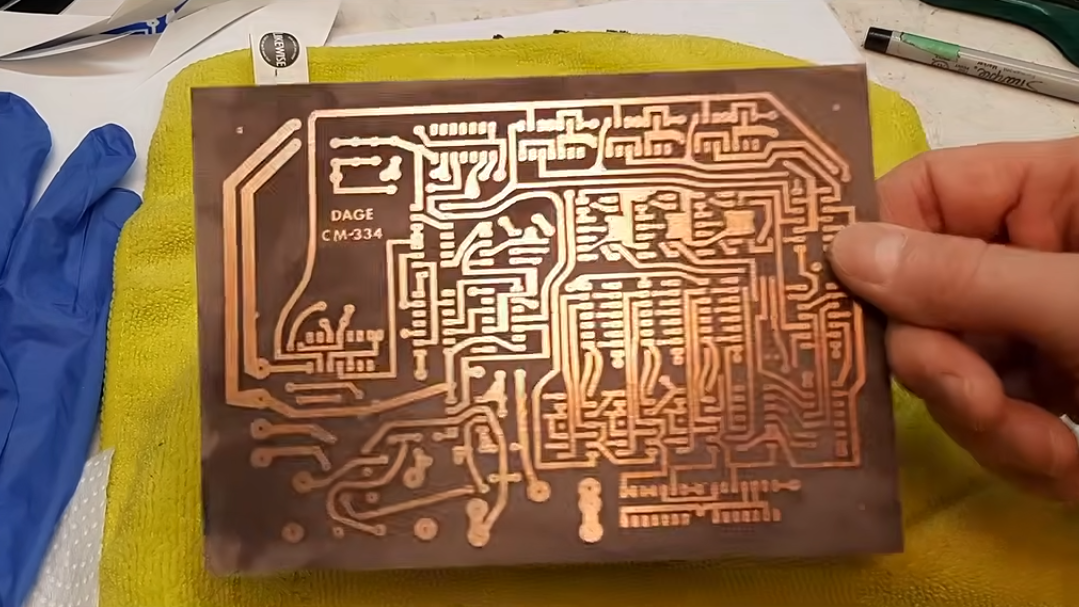
In the era before PCB shops would make almost any PCB imaginable, as well making many other manufacturing processes for prototypes available to hobbyists, there were several ways of making …. Improved Double-Sided Toner Transfer Method. Many of which involve harsh chemicals and were easy to mess up.
Getting a single-layer PCB using the toner transfer method, for example, took a bit of practice (and a fume hood) to get right. [Bettina Neumryr] is working on a custom two-layer PCB, and has a new trick to get it to come out right despite the added complexity of the second layer. The method starts out as a standard single-layer board in effect.
Toner is ironed onto a copper board, in this case using a laminator, which allows the board to go into an acid bath which washes away all of the un-tonered copper. But with the second layer exposed, this would wash away the other side of the board completely. [Bettina] is using a new method here to protect that layer during the first bath: covering it in ink from a magic marker.
Discover more from ChuckysCarnage
Subscribe to get the latest posts sent to your email.

