
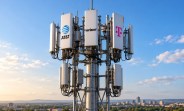
Back in May, AT&T, Verizon, and T-Mobile announced "an agreement in principle" to create a joint venture that would strive to end dead zones across the US. Today, almost five months later, that joint venture has finally been officially launched. Paul Roth will serve as interim CEO of the new company while an active search is underway for a permanent CEO.
Roth previously held several leadership positions at AT&T, Cingular Wireless, and Ameritech. The joint venture will be managed by a board of representatives from each of the three carriers. Its aim is to "nearly eliminate" dead…
AT&T, Verizon, and T-Mobile officially launch joint venture to end dead zones. Its aim is to "nearly eliminate" dead zones in the US, reaching previously unserved areas, provide reliable redundant connectivity in emergency situations, and to improve network performance in general, while giving customers simpler access to satellite services across providers. Through combined investment by the three carriers via the new joint venture, provider options for satellite connectivity will expand, and, as a first step, direct-to-device access will improve.
This is likely an attempt to get ahead of potential rivals like Starlink and Leo. AT&T, T-Mobile and Verizon have officially teamed up to end coverage gaps.
News AT&T, T-Mobile and Verizon have officially teamed up to end coverage gaps This is likely an attempt to get ahead of potential rivals like Starlink and Leo. The three companies have entered into an unnamed joint venture that will use satellites to help close coverage gaps in areas where traditional service is limited.
This aims to complement pre-existing mobile networks. The companies first announced that they would be pooling their resources to expand satellite coverage back in May, and now we have more details.
The venture will be managed by a board with representatives from each company and there’s already an interim CEO, a guy named Paul Roth who has plenty of experience in the industry. A press release describing the venture promises that it will "nearly eliminate dead zones in the US currently without mobile service," which is certainly good news.
The companies also tout "reliable connectivity in emergencies" when typical ground-based networks are unavailable. The companies have even promised that traditional customers will get improved network performance, as there will be "simpler access to satellite services across providers." This should speed up feature updates and prevent connection drop-offs.
This will "enhance competition as consumer choices grow in satellite service", the official press release states.
Discover more from ChuckysCarnage
Subscribe to get the latest posts sent to your email.

