
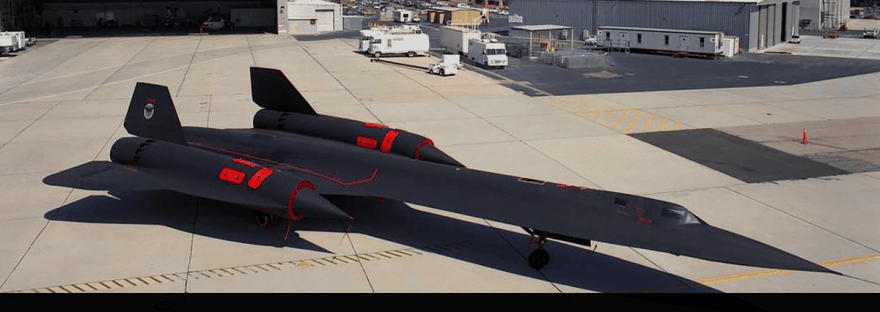
Insights into the current status of NASA's SR-71 #844, what it will take to fly it again, and what the agency may be looking to do with it. NASA When it comes to the future of Tail 844, the SR-71 Blackbird that mysteriously disappeared from NASA’s Armstrong Flight Research Center, few people have more insights than Tim Conners. When he worked at NASA in the 1990s, Conners was the lead propulsion engineer for the agency’s Blackbird program.
He worked extensively on 844 and has an intimate knowledge of what made the iconic aircraft tick. Now, he brings an insider perspective on NASA’s secretive work to get the Blackbird back in the air and speculates on what it would take to do so, as well as the famed jet’s possible flight test role for the agency after 27 years of dormancy. Late last month, we wrote about how satellite imagery taken over Armstrong showed that Tail 844 had been missing since at least May.
The revelation was first made by Steve Trimble, Aviation Week ‘s defense editor and friend of TWZ. It came after NASA Administrator Jared Isaacman cryptically teased plans for a new high- and fast-flying X-plane with a silhouette of an aircraft that immediately drew comparisons to the Blackbird. Trimble reported just this week that NASA had been talking to ex-SR-71 program personnel about coming back to work on the aircraft.
This confluence of events has led to rampant speculation about whether NASA was planning to resurrect the Blackbird and for what purpose? In an exclusive interview with TWZ, Conners, now technical director for advanced weapons systems at Tiberius Aerospace, gave us his take on NASA’s Blackbird revelations and insights into what NASA is working on and how far along they are in the process. Some of the questions and answers have been slightly edited for clarity.
Tim Conners Q: Tell me about your background with the SR-71 program. A: So that basically fell in my lap when I was an engineer at NASA’s Dryden [ Flight Research Center ] back in the early ’90s when NASA took delivery of three of the airframes when the Air Force was retiring the fleet.
So NASA got two A models and a trainer. Obviously, tail number 844, which is NASA’s designation, is the one that’s getting all of the attention right now.
But those came to Dryden in the early ’90s. By luck of the draw, I was in the propulsion group.
We were short-staffed for several reasons, and they needed an engineer on Blackbird. And I had been with NASA for about three or four years at that point, and I got tapped to prepare the NASA side of the mission for the upcoming research flights.
So I had a few years to get familiar. That was a part-time job, by the way.
I also owned the F-15 fleet at NASA as a propulsion engineer, and that was occupying a lot of my time, but it did give me an adequate amount of time to get familiar with the way that the airplane operated, at least from the propulsion standpoint. And then we began doing research missions in ’96.
I left NASA in ’98, but I was able to support the program through two years of flight testing and all the years of preparation for those two years. Q: Tell me more about your role with the Blackbirds.
A: I was lead propulsion engineer on the NASA side. So what NASA would do is they would assign disciplinary leads across from their industry and government counterparts.
So Dryden’s disciplinary leads, their job was basically to make sure that any experimental packages were integrated safely with the airframe, and that we could execute the proposed test missions safely and successfully. I owned propulsion and I also owned performance.
So if you recall the Lockheed Linear Aerospike rocket engine activity, that package weighed 20,000 to 25,000 pounds and was mounted externally on the back of the SR-71.
Discover more from ChuckysCarnage
Subscribe to get the latest posts sent to your email.

