
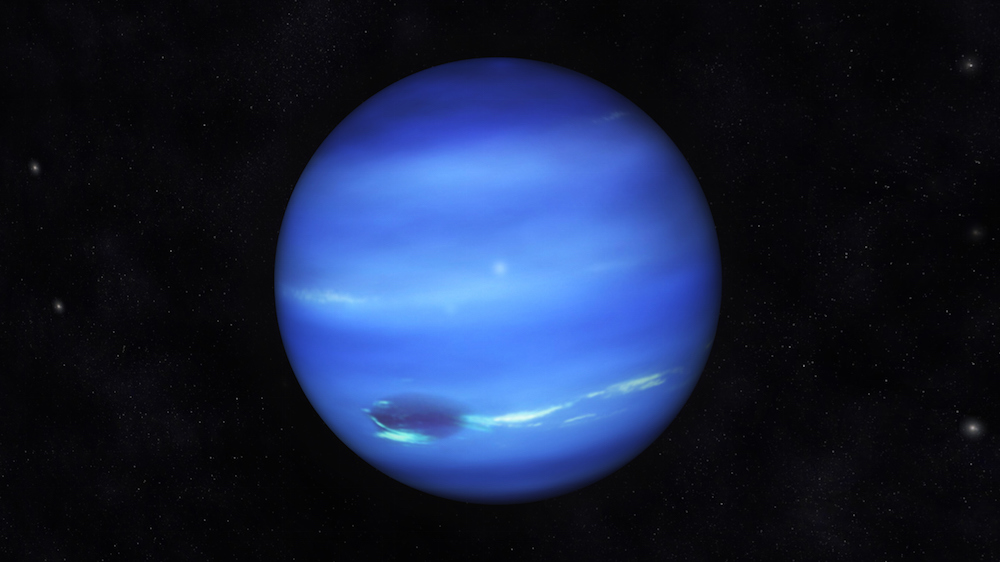
One of the problems with planetary science is that you generally cannot easily investigate the exact conditions in their interior, so you’re left to extrapolate what is happening inside them …. Scientists Create Hexagonal Packed Ice at Extreme Pressures. One of the resulting questions is what ice giants like Neptune and Uranus in Earth’s solar system have exactly at their core.
We do know that it is mostly rocks and ice, but what kind of ice you end up with at these intense pressures is a good question that [Alexis Forestier] et al. Set out to answer, with their results published in a Physical Review Letter paper ( ArXiv preprint). It’s noteworthy that there isn’t just water ice at these planetary cores, with this study only investigating water ice specifically.
To get the water to the pressures it would experience courtesy of ice giant gravity, a diamond anvil was used, with synchrotron x-ray diffraction allowing for the changes to the sample to be observed. The phase diagram of water includes several phases beyond what us Earth-dwellers would call ‘ice’, with at higher pressures above about 80 GPa the formation of ice X, featuring a body-centered cubic (BCC) oxygen sublattice. Subsequent discovered phases were face-centered cubic (FCC) and now hexagonal close-packed (HCP) ice, all differing in the packing of the oxygen sublattice.
Discover more from ChuckysCarnage
Subscribe to get the latest posts sent to your email.

