
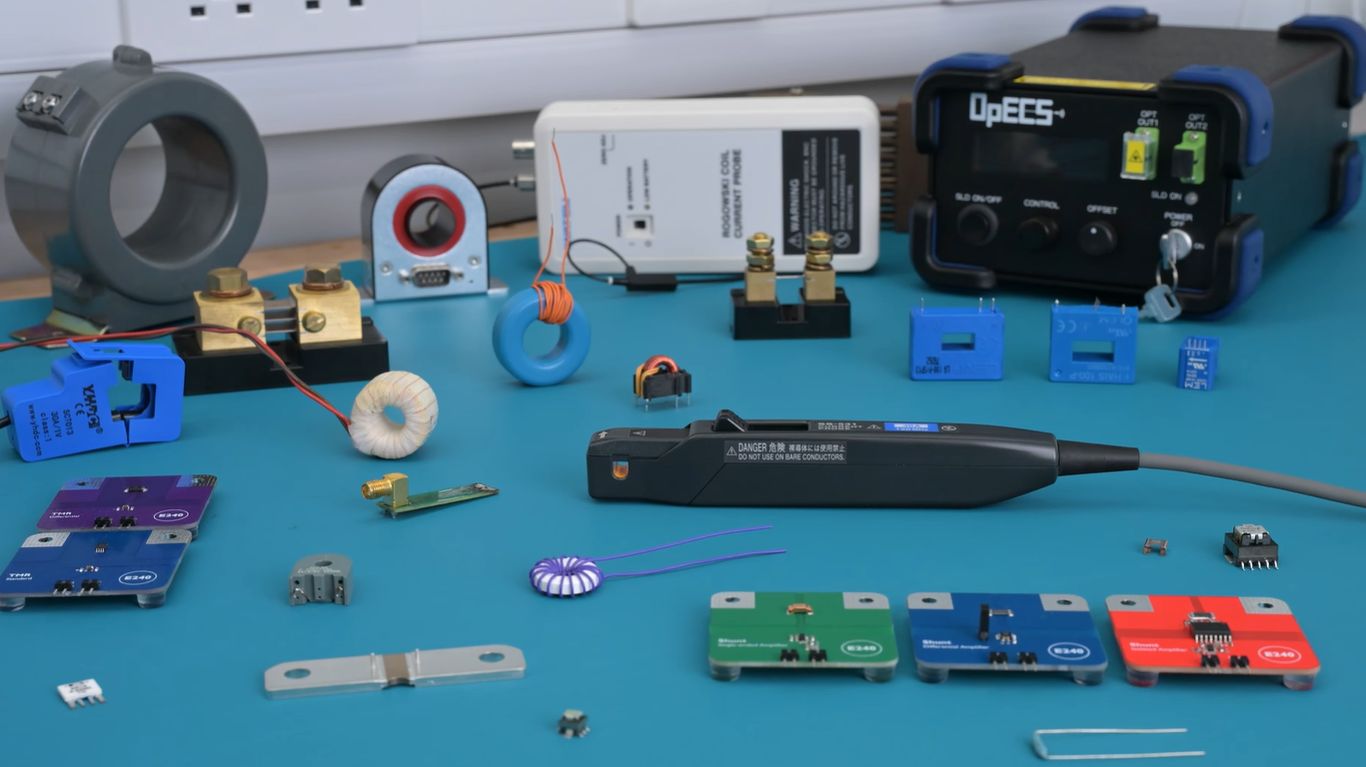
Measuring electric currents is an essential element of many electrical systems, but doing so in a way that is as nonintrusive as possible is not an easy problem to solve. Every Type of Current Sensor Explained. Due to this we got many current sensors to choose from for any given application, with [ElectrArc240] running us through these variants in a recent video.
The fairly low-tech, cheap and quite reliable method of using a shunt resistor is first demonstrated. This sees a lot of use in fairly low-voltage and low-current applications, with for example videocards using it to limit the amount of power the GPU can use, a feature that modders will happily bypass. Here simply the voltage drop across a known resistance value is measured, from which the current can be derived.
Of course, you got higher voltage and higher current applications too, as well as direct- and alternating current, with the latter especially allowing for easy current measurements simply from the electromagnetic field, or flux. Anyone who has used a clamp meter can attest to that such contact-free current sensing works, even for DC applications. Beyond the basic transformer type you got many variants including Hall-Effect, TMR and fluxgate sensors, as well as the fiber-optic current sensor that uses an interferometer to measure the phase-change induced by the magnetic field – the Faraday effect – to the transmitted electromagnetic radiation.
Discover more from ChuckysCarnage
Subscribe to get the latest posts sent to your email.

