
Key Developments
- The gang murder and the women who went to the white house looking for answers the fallout of the murder of 33-year-old robert mccartney, a father-of-two, reverberated around the world – forcing the ira to acknowledge several of its members were involved.
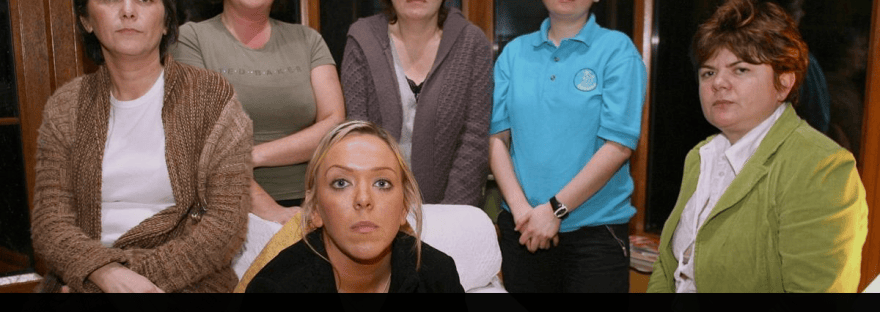
The fallout of the murder of 33-year-old Robert McCartney, a father-of-two, reverberated around the world – forcing the IRA to acknowledge several of its members were involved. Image source, PA Media Image caption, Robert McCartney's sisters from left, Catherine, Donna, Paula, Claire and Gemma with his partner Bridgeen Hagans (seated, centre) have long campaigned for justice over his murder By Chris Thornton and John O'Kane, BBC Spotlight Published 7 hours ago It is a Sunday night in the pub. There is football on the TV and people packed around the bar – then suddenly, violence erupts.
Bottles are smashed and broken glass is slashed across the throat of one of the biggest men in the bar. The melee spills out into the street, where the injured man says out loud the name of the man he believes attacked him. There is, he says later, an immediate reaction with hostile men in the crowd around him saying: "You're getting it, you're getting it." A knife flashes and two friends are left bleeding heavily on the pavement.
Robert McCartney, an engaged father-of-two, took no part in the violence, according to the few available accounts of what happened that night in January 2005. But the 33-year-old ended up losing his life, and no one has ever been held to account for his murder – an outcome that reverberated across the world and is now the subject of a documentary series, Murder in Belfast: Sisters Seeking Justice. Image source, McCartney family Image caption, Robert McCartney was engaged when he was killed in January 2005 The failure to secure convictions can be linked to the organisation which exercised power over many of those present.
Even while Robert McCartney was being treated by paramedics on the street, his killers' tracks were being covered. Back in Magennis's bar, right behind the Royal Courts of Justice in central Belfast, the pub's CCTV tape was snatched and the bar was cleaned with bleach. "It wasn't their first rodeo," said David Lowans, a former Police Service of Northern Ireland (PSNI) detective who worked on the case.
"They were experienced in clearing themselves forensically." Image source, PSNI Image caption, The bar was a popular venue in central Belfast, which backed on to a series of smaller streets The series, made by BBC Northern Ireland in association with Irish broadcaster RTÉ, obtained crime scene video and photos showing the aftermath of the incident. The clean-up wasn't complete and police were able to find some blood stains in parts of the bar.
But substantial evidence seemed to have gone. The knife used in the murder was never found and reportedly destroyed.
Crucially, witnesses appear to have been silenced. "Out of the 70 people who were in the bar, we got no information from anybody to say the detail of what happened," said Lowans.
"We either got: 'I was in the toilet' or 'I didn't see anything', which is unbelievable. "Whenever this altercation took place there were lots of people there." Image caption, David Lowans was a PSNI detective for more than 15 years In the days after the murder, Robert's five grieving sisters and his devastated fiancée, Bridgeen Hagans, had even less information about the murder than the police.
"We were still completely in the dark as to what had happened," said his sister Paula McCartney. "Didn't know where it had happened, how it had happened, who'd done it.
Nothing." But they soon began to hear rumours. "It was just people coming in and telling what they'd heard in the street and 'such and such was in the bar that night'," said another sister, Catherine McCartney.
"All the talk about who'd done it, who was involved." The information they were receiving explained why some witnesses weren't talking. The killers were said to be members of the Provisional IRA.
Secret investigation and an offer to kill The IRA had waged a campaign of violence for 30 years. In 2005, as Northern Ireland's peace process was being cemented, the group was observing a ceasefire.
It issued a statement denying involvement in McCartney's murder, but that didn't convince witnesses who feared deadly consequences if they named IRA members to the police. Image source, PSNI Image caption, Robert McCartney and another man were attacked in Market Street after leaving the bar "I've been about these areas enough to know how dangerous this organisation can be when they want to be," said Ed Gowdy.
He was McCartney's friend and one of the witnesses telling his story on television for the first time.
Discover more from ChuckysCarnage
Subscribe to get the latest posts sent to your email.

