
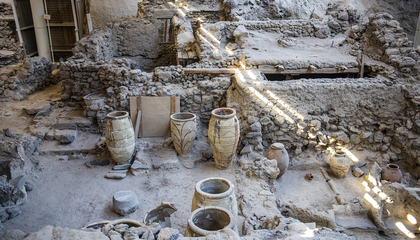
The Thera volcano, on modern-day Santorini, buried Akrotiri in ash in the 17th or 16th century B.C.E. The eruption was one of the largest in recorded history. Greece Has Its Own Pompeii, and the Ruins Tell a Captivating Story of a Sophisticated, Seafaring Bronze Age Society.
The ruins of Akrotiri, a Bronze Age settlement on what is now the Greek island of Santorini Westend61 via Getty Images The earth rumbled for days. Inhabitants of the seafaring Bronze Age settlement of Akrotiri watched smoke plume from Thera, a long-dormant volcano on what is now the Greek island of Santorini. People gathered their belongings and safely stored the valuables they were forced to leave behind.
When these minor earthquakes and eruptions subsided, residents returned to Akrotiri, collecting materials for reconstruction and beginning the arduous process of repairing the damage. As conditions worsened, they made the difficult decision to flee once more, hopeful that their homes would survive the coming devastation. When Thera erupted again, the explosion was so powerful that it destroyed Akrotiri, burying the settlement (and the island that shared the volcano’s name) in some 200 feet of ash and pumice stone.
The timing of the disaster is the subject of intense debate, but scholars generally date it to between 1620 and 1530 B.C.E. The event was one of the largest volcanic eruptions in recorded history: Thera released about four times more volcanic material than the infamous Krakatau eruption, which killed upwards of 36,000 people in what is now Indonesia in 1883.
Discover more from ChuckysCarnage
Subscribe to get the latest posts sent to your email.

