
All but a few of our very youngest readers are surely familiar with music formats that rely on optical disks. When we say [RobDevBuilds] made a MOD tracker that uses …. Encoding MOD Files Optically On Paper, Because Amiga’s Legacy Will Outlast M-Disks.
When we say [RobDevBuilds] made a MOD tracker that uses an optical disk, then, you might be forgiven for thinking he stuck a bunch of MOD files onto a CD– MOD files being a format of electronic music that was conceived of on the Commodore Amiga that is still used to this day. A dedicated MOD-CD player might be a fun project, but it’s not what [Rob] did; his project is far more impressive and impractical, as he’s come up with a way to encode the MOD files on paper for optical playback. This way the Amiga’s legacy can be preserved longer than the paltry thousand years promised by the optical M-disk format.
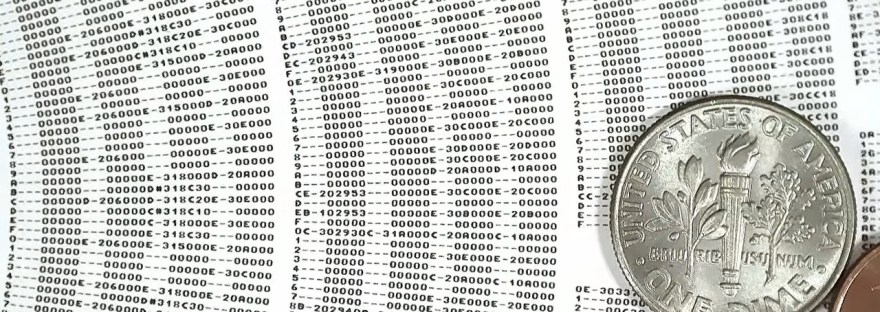
Zooming way, way in on the disk reveals that he’s actually printing the patterns of the MOD file row by row, just like you’d see playing it in a ‘tracker’ program. A MOD file, you see, does not encode music like a WAV or MP3; rather, like with MIDI, it lists the notes the software reading the file– traditionally called a tracker–is to recreate. Unlike a MIDI file, though, you don’t have to store the same notes more than once: repeating sections are stored in patterns.
So most of the disk is just a long list of hexadecimal numbers: several columns worth, one for each ‘voice’ or instrument playing in the song.
Discover more from ChuckysCarnage
Subscribe to get the latest posts sent to your email.

