
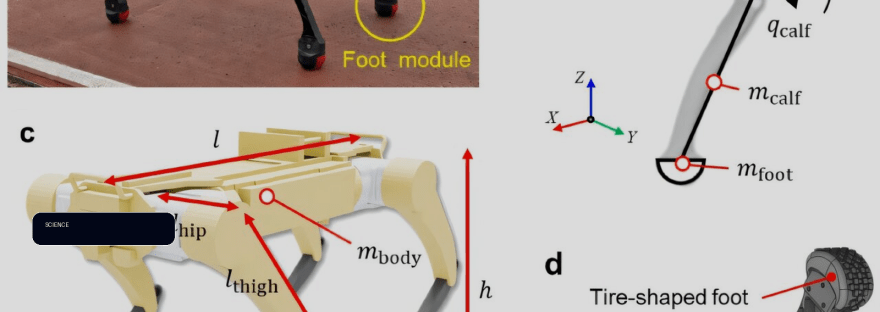
Porous 3D-printed feet cut quadruped robot power use has moved forward this week. This post distills the reporting from Phys.org Technology and adds Chucky’s take on what it actually means for people who use this technology.
Porous 3D-printed feet cut quadruped robot power use. Quadruped robots, which walk on four legs, are increasingly used for tasks such as inspection, transportation and search-and-rescue operations.
However, their repeated leg movements consume far more energy than the rolling motion of wheeled robots, making it challenging to improve energy efficiency.
The practical point is that porous 3d-printed feet cut quadruped robot power use can shift how companies, consumers, and builders respond to new tools, costs, and constraints inside the science landscape.
Quadruped robots, which walk on four legs, are increasingly used for tasks such as inspection, transportation and search-and-rescue operations
Known Details
- Quadruped robots, which walk on four legs, are increasingly used for tasks such as inspection, transportation and search-and-rescue operations. However, their repeated leg movements consume far more energy than the…
The strongest next step is to watch for follow-up evidence, policy changes, pricing shifts, or independent testing that could change the first impression.
- peer review, replication, or follow-up research from other teams
- whether the method moves from lab testing into real-world systems
- which industries, tools, or public problems the work could eventually affect
- clear explanations of limits, uncertainty, and what still needs proof
Why This Matters
Porous 3D-printed feet cut quadruped robot power use matters because it signals a real change in how science products and services are used day to day. Concretely, the reporting notes that quadruped robots, which walk on four legs, are increasingly used for tasks such as inspection, transportation and search-and-rescue operations. The story is being carried by Phys.org Technology. For science readers, the useful frame is: science stories are worth tracking when they point toward practical tools, policy changes, future products, or a better understanding of how the world works.
Chucky’s Analysis
This one deserves a second look. Porous 3D-printed feet cut quadruped robot power use is not just another headline — it is a concrete signal about where science technology is heading, and it matters more than a quick skim.
The strongest detail in the reporting is that quadruped robots, which walk on four legs, are increasingly used for tasks such as inspection, transportation and search-and-rescue operations. The sources also highlight that quadruped robots, which walk on four legs, are increasingly used for tasks such as inspection, transportation and search-and-rescue operations.
For readers, the immediate implications are practical: science stories are worth tracking when they point toward practical tools, policy changes, future products, or a better understanding of how the world works. That means the useful questions are about reliability, cost, privacy, support, and whether the change improves something you already do. Phys.org Technology is the primary source here, so I would treat the details as solid but not yet independently confirmed.
Where I stay skeptical is the usual gap between announcement and reality. Follow-up releases, pricing, availability, and independent testing will decide whether Challenging, Consume, Efficiency keeps its promise. Until then, the smart move is to watch what real-world use actually shows.
My bottom line: Porous 3D-printed feet cut quadruped robot power use is worth following, not because it is exciting, but because it could quietly change everyday decisions in Science. Track the follow-ups, weigh the evidence, and do not let the headline outrun the proof.
Key Takeaways
- Porous 3D-printed feet cut quadruped robot power use: a real development in Science, not just a rumor.
- What we know: quadruped robots, which walk on four legs, are increasingly used for tasks such as inspection, transportation and search-and-rescue operations.
- What it means for you: science stories are worth tracking when they point toward practical tools, policy changes, future products, or a better understanding of how the world works.
- What to watch next: follow-up coverage of Challenging, Consume, Efficiency, plus independent testing and user feedback.
Sources
This article was compiled from the following independent reporting:
Links direct readers to the original coverage so claims can be checked directly.
Discover more from ChuckysCarnage
Subscribe to get the latest posts sent to your email.
 ChuckysCarnage